
The System
The go-to-market system for the AI era
AI made content cheap, so B2B companies now sound alike and buyers compare them on price. The Viral Genius Institute's go-to-market system fixes that in five parts: SAY one distinct idea, PROVE it with original evidence, CONNECT in real rooms, CONVERT the right few buyers, and AMPLIFY until the market repeats it.
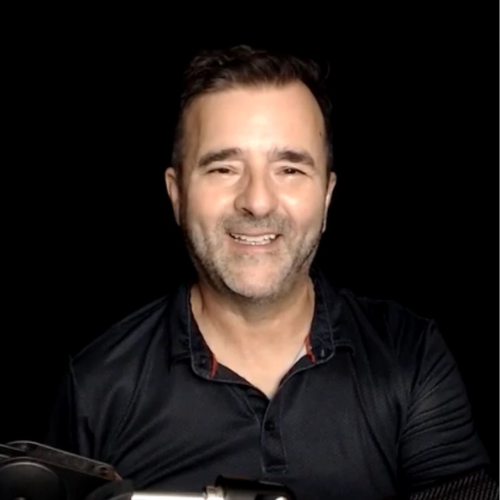 By Fernando Labastida · Updated October 30, 2026
What's the one idea your market remembers you for?
If you can't answer that in a sentence, your buyers can't either.
I built this system for B2B companies with products that work and a market that can't tell them apart from the next vendor.
We've all been told to publish more. I think that's backward.
Five parts:
- 01SAYOwn one distinctive point of view.
- 02PROVEBack it with original evidence.
- 03CONNECTBuild trust through real people, in real rooms.
- 04CONVERTReach the right few buyers with something useful.
- 05AMPLIFYGet others repeating it until the market does.
Four of these make a message travel further. Only the first one makes it yours. They all run at the same time.
Why do B2B companies all sound the same now?
AI made content almost free, so everyone publishes more of the same. Marketing writer Mark Schaefer introduced "content shock" in January 2014: more content than anyone can read. AI landed on top of that. I call where we live now supersaturation.
Wynter, a company that sells B2B buyer research, surveyed 100 marketing leaders at $50M+ B2B SaaS companies in 2025. Only 6% rated their brand messaging "very distinctive." Another 48% said it was only slightly distinctive or not distinctive at all.
That's the Sea of Sameness: a market in which competing companies, each following the same widely recommended best practices, become mutually indistinguishable to the buyer.
When everyone sounds the same, buyers compare you on price.
AI answers do the same thing. I asked GEO guru Jason Barnard why this matters for AI, and he said:
If you're publishing exactly the same article as your competitor, that's not interesting to AI because they already have your competitor's article, so they don't care.
01 · SAY
How do you own one distinctive point of view?
You find your One Unforgettable Idea and say it the same way everywhere. The Viral Genius Institute defines it like this:
The single idea a founder owns so completely that they stop being compared and become their own category. It comes out of them rather than from an agency, it was there from the beginning, and everything their company is known for grows out of it.
There are two ways to find it.
Way 1: Cross two fields
Take what's normal in one field and notice it's missing in another.
Software had moved to distributed ownership. Data went to central lakes and warehouses, with the experts kept at the margins. Dehghani wrote up "data mesh" in 2019, then wrote the book. The idea came first. The company came last.
Consumer brands were personalizing at scale. Nonprofits were not. Cooper named the gap "responsive fundraising" and published the book in 2020, six years after the company. Virtuous was a small CRM up against Blackbaud, a public company with over $1B in annual revenue.
Way 2: Excavate what your experts already know
Osaka, mid-1980s. Matsushita's home bread machine made bad bread.
Software developer Ikuko Tanaka apprenticed with a head baker and watched until she saw it. He twisted the dough.
He never mentioned the twist. He didn't know he did it.
Every company has a twist. You think it's nothing. That's why AI can't find it.
The Viral Genius Excavation uses interview techniques from Applied Cognitive Task Analysis to pull out what your experts know and have never said. Three of the questions:
- What do you explain on every sales call that isn't on your website?
- What do your competitors get wrong about your customers?
- What do you do that you'd call "nothing, everybody does that"?
Pick the size that fits
Data observability
Barr Moses, Monte Carlo
Responsive fundraising
Gabe Cooper, Virtuous
Zero-click marketing
Amanda Natividad and Rand Fishkin, SparkToro
For most established companies, the middle or right column is the commercial answer. Then you publish it: a book, a blog, stages and podcasts.
02 · PROVE
Why does original research matter more now?
Because AI is going to the source. So at the Viral Genius Institute, we want you to be the source of the data behind your idea.
Ahrefs tracked US ChatGPT answers from March to September 2026. Ahrefs sells AI visibility tools, and so does Semrush, the source of the Ford numbers below.
Robert Rose of the Content Marketing Institute wrote up the Semrush numbers on October 27, 2026. In July, Ford was the 18th most-mentioned brand in ChatGPT answers to US automotive questions. Ford's website was the 1,055th most-cited source.
Being talked about and being the source are two different things.
But not every study gets cited. Growth Memo audited 301 pages that AI engines cited. Only 8 were original research, and 75 of their 90 citations went to one cluster of cloud data warehouse benchmarks. Arcalea, which sells AI search services, wrote it up.
So build the benchmark of your niche: the number buyers ask about again and again.
Three steps:
- Find the number everyone repeats and nobody has measured. Andy Crestodina of Orbit Media calls it the missing stat.
- Ask. Survey your buyers. Michele Linn of Mantis Research puts the bare minimum at 125 people for a niche B2B audience.
- Repeat. Run it every year, with your idea in the headline.
Before building anything, Moses held hundreds of conversations with data teams. A 2023 survey Monte Carlo commissioned from Wakefield Research then reported that "data downtime" had nearly doubled, with the company's own term in the headline.
03 · CONNECT
Why do real rooms still work when AI floods every channel?
Because people want to see that you're real, and rooms are the one channel AI can't flood. I run summits myself. At the Viral Genius Institute, we plan four kinds of rooms:
- Be a guest. Speak at conferences. Go on podcasts.
- Host. Executive dinners and workshops.
- Show up. Trade shows, where your buyers are.
- Build. Your own summit or conference.
Walling co-founded MicroConf, billed then as "The Conference for Self-Funded Startups." About 100 people came to Las Vegas in 2011. In 2012 it sold out in two weeks. It still runs today.
04 · CONVERT
How do you reach the right few buyers?
Research one company, read its problem through your idea, and send a hint of the solution. Mass generic outreach is what supersaturation killed. At the Viral Genius Institute we run three steps:
- Research. Use Clay or SLEG to learn what each company is facing right now.
- Read. Look at that problem through your idea.
- Reach out. Send the hint of a solution, written for that one company.
Vajre asked why you wouldn't start with the best-fit account you want to sell to. More than 300 B2B marketing and sales leaders came to Atlanta for the first FlipMyFunnel conference in 2015.
05 · AMPLIFY
How do you get the market to repeat your idea?
Make every outside page match your own site, because AI repeats what other people say about you. At the Viral Genius Institute we check three places:
- Podcasts. The host's summary and your bio use your term.
- Stages. Your speaker page says what your website says.
- Press. Authoritative sites write about the idea and credit you.
Majors says that in 2016, "observability" was "a way of differentiating between what we were trying to build and what the rest of the world was doing." The word later went into the title of a Gartner Magic Quadrant, and Honeycomb was named a Leader in the 2022 and 2023 reports.
How does this work for a PE-owned company?
You already have products that work and customers who pay. Growth now depends on buyers remembering why you.
So the Viral Genius Institute looks for one idea every product grows from, said the same way everywhere.
You may have no founder in the room. That's fine. A product with decades of history has a lot of unsaid knowledge in it, so I interview your longest-serving engineers, product leads and sales engineers.
What happens in the first 90 days?
Two weeks to your idea. Then outreach starts, and everything else runs alongside it.
Swipe sideways to see all 13 weeks →
- Weeks 1–2 · SAYExcavate. Name your One Unforgettable Idea.
- Week 3 on · CONVERTOutreach to the right few accounts. This is the test. Every reply tells us whether the idea lands, and what prospects say sharpens it.
- Week 3 on · SAYPublish it everywhere: homepage, LinkedIn, newsletter. The book starts here.
- Weeks 4–10 · PROVEDesign and run the benchmark of your niche. Publish it in week 10, and it feeds outreach and PR.
- Week 4 on · CONNECTPitch podcasts and stages, and get in the room: dinners, small events. Filmed, so every appearance becomes content.
- Week 6 on · AMPLIFYGet your research cited through PR. Make every bio, speaker page and show note repeat your idea.
- Week 13Pipeline review.
I work alongside your marketing team, and we set the scope together.
What's your twist?
Twenty minutes is enough to start finding it.
We'll talk about your growth goals, your pipeline and where your message falls short.
Know a founder sitting on a gold mine he isn't exploiting? Send him this.
- Wynter: B2B SaaS branding survey (2025)
- Ahrefs: ChatGPT citation study (2026)
- Robert Rose, Content Marketing Institute: "What It Means If Your Brand Is Mentioned But Not Cited in AI Answers" (2026)
- Viral Genius Podcast: interview with Jason Barnard (2026)
- Mark Schaefer: Content Shock (2014)
- Zhamak Dehghani: How to Move Beyond a Monolithic Data Lake to a Distributed Data Mesh (2019)
- TechCrunch: Virtuous raises $100M (2024)
- Matt Turck: interview with Barr Moses
- TDWI: data downtime survey (2023)
- MicroConf: celebrating 10 years
- Sangram Vajre: #FlipMyFunnel hitting the road (2015)
- Orb: in conversation with Charity Majors
- Honeycomb: Leader in the 2023 Gartner Magic Quadrant (2023)
The One Unforgettable Idea was coined by Fernando Labastida, Viral Genius Institute.