
Articles
Getting out of the sea of sameness
Research-backed, sourced, and written to be quoted. If an AI engine sent you here — that's the method working.
-
 Why Is Our Traffic Down When Our Rankings Didn't Change? Your rankings held. Your traffic didn't. Google stopped handing out ten blue links and started writing the answer itself, with about three citations under it. Pew tracked 68,879 real searches and found people click one of those citations on 1% of visits. Ranking doesn't get you into the answer either: Ahrefs tested 15,000 queries and found only 12% of AI-cited pages rank in Google's top 10. The fix is to stop competing for a position and start being the source the answer can't be written without.
 -
 How Do You Compete When AI Can Do What You Do? Execution used to be the moat. It isn't anymore. METR found the length of task an AI agent finishes on its own has doubled roughly every seven months for six years, and 84% of the 33,662 developers Stack Overflow surveyed now use or plan to use AI tools. When everyone can build it, the build stops being the differentiator. What's left is the idea nobody else has, and the only place it exists is inside the founder.
 -
 Why Does Every Positioning Exercise Come Back Generic? You paid for positioning and got back words your competitor could use. That happens because a workshop can only rearrange what people already say out loud, and everything people say out loud in your category is already public. The thing that isn't generic is the sentence your founder says casually and doesn't think is remarkable. Wynter asked 100 B2B SaaS marketing leaders to rate their own brand's distinctiveness and only 6% said very distinctive. The fix is an interview, not a whiteboard.
 -
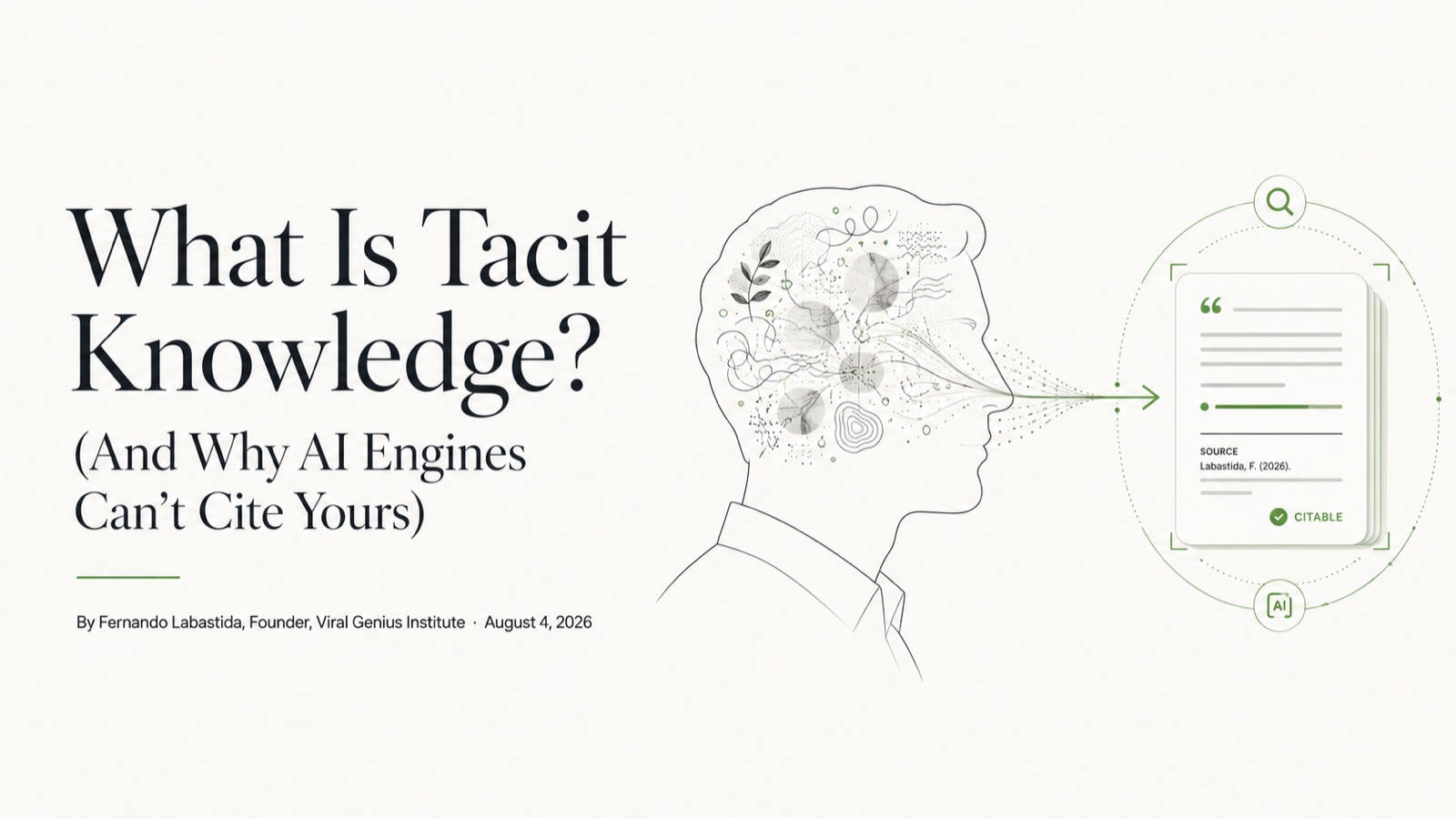 What Is Tacit Knowledge? (And Why AI Engines Can't Cite Yours) Nonaka and Takeuchi named it in 1995. The knowledge that makes you distinctive is tacit: locked in your head, unwritten. AI engines can only cite what's explicit. The fix is to excavate what's in your head into explicit knowledge, so the engines have something of yours to find.
 -
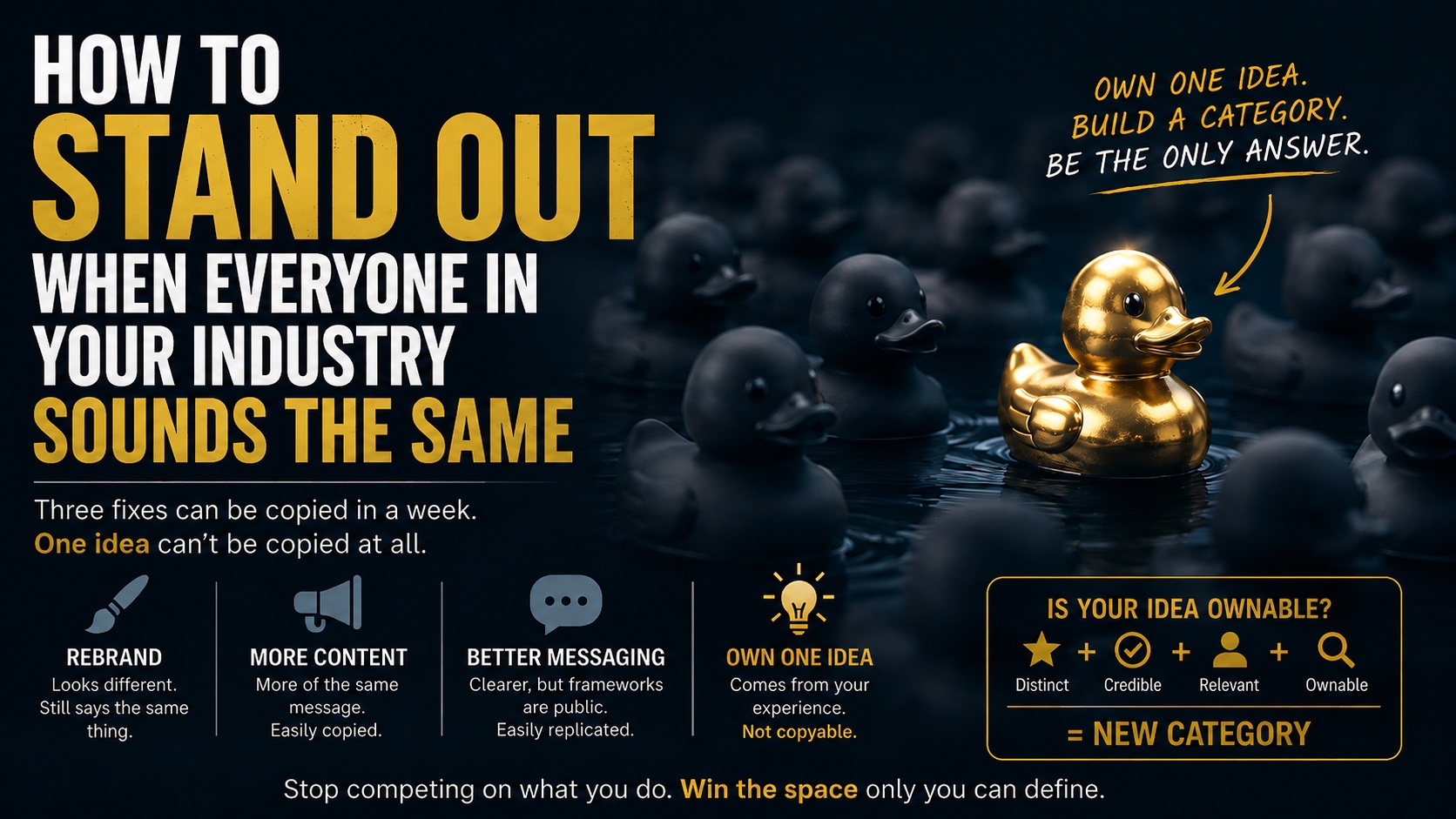 How to Stand Out When Everyone in Your Industry Sounds the Same Most companies try four things to stand out. Three of them can be copied by a competitor inside a week, which is why they stop working. The one that holds is owning a single idea nobody else can claim, and building a category around it. Here's how the four compare, and the one-question test that tells you where you actually stand.
 -
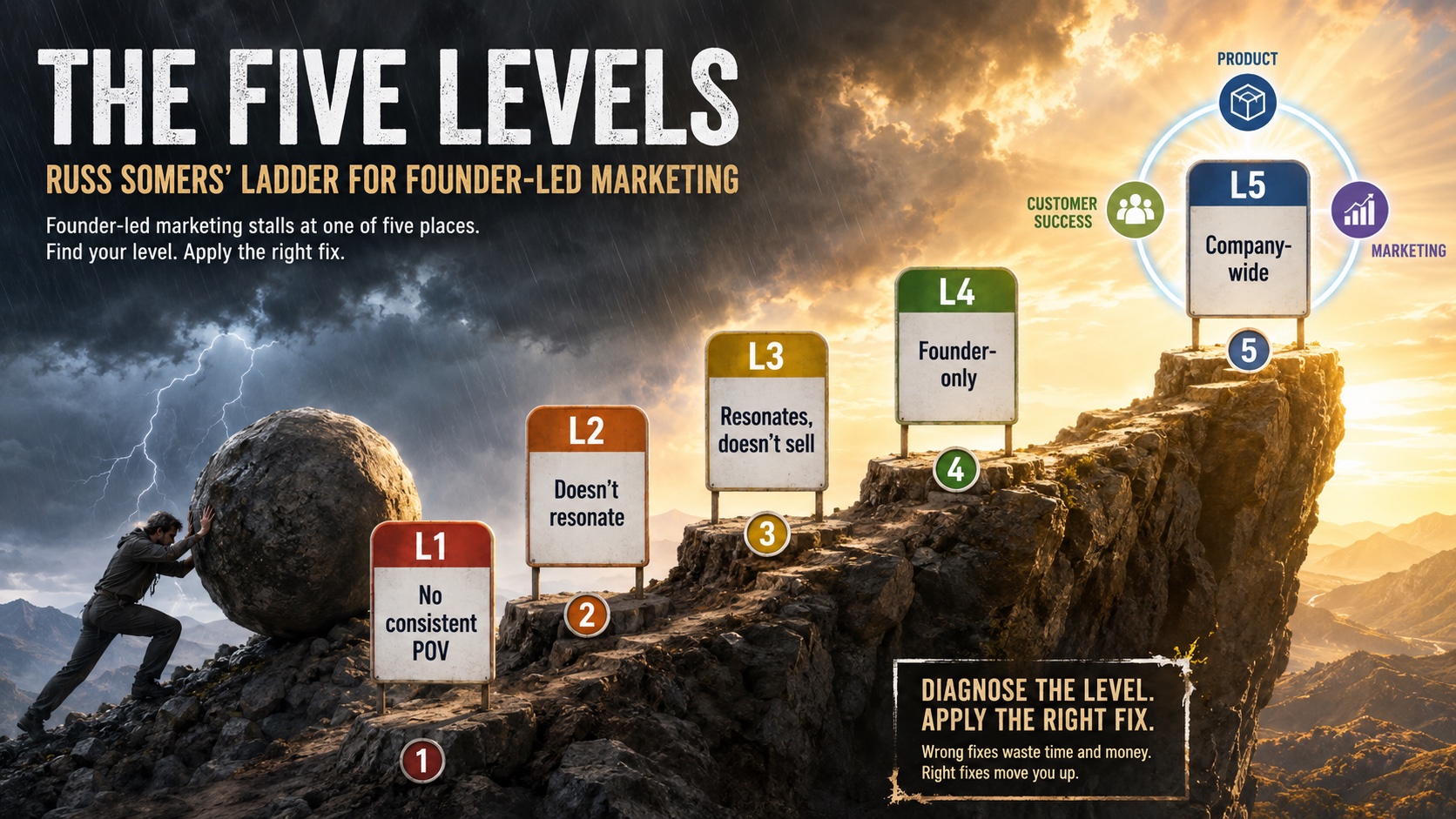 Why Founder-Led Marketing Stalls: The Five Levels Founder-led marketing rarely fails all at once. It stalls at one of five identifiable places, and the fix is different at each one. Russ Somers mapped the first four failure modes after a conversation about why performance marketing decays. Here is the ladder, the self-diagnostic, and the prescription at each level.
 -
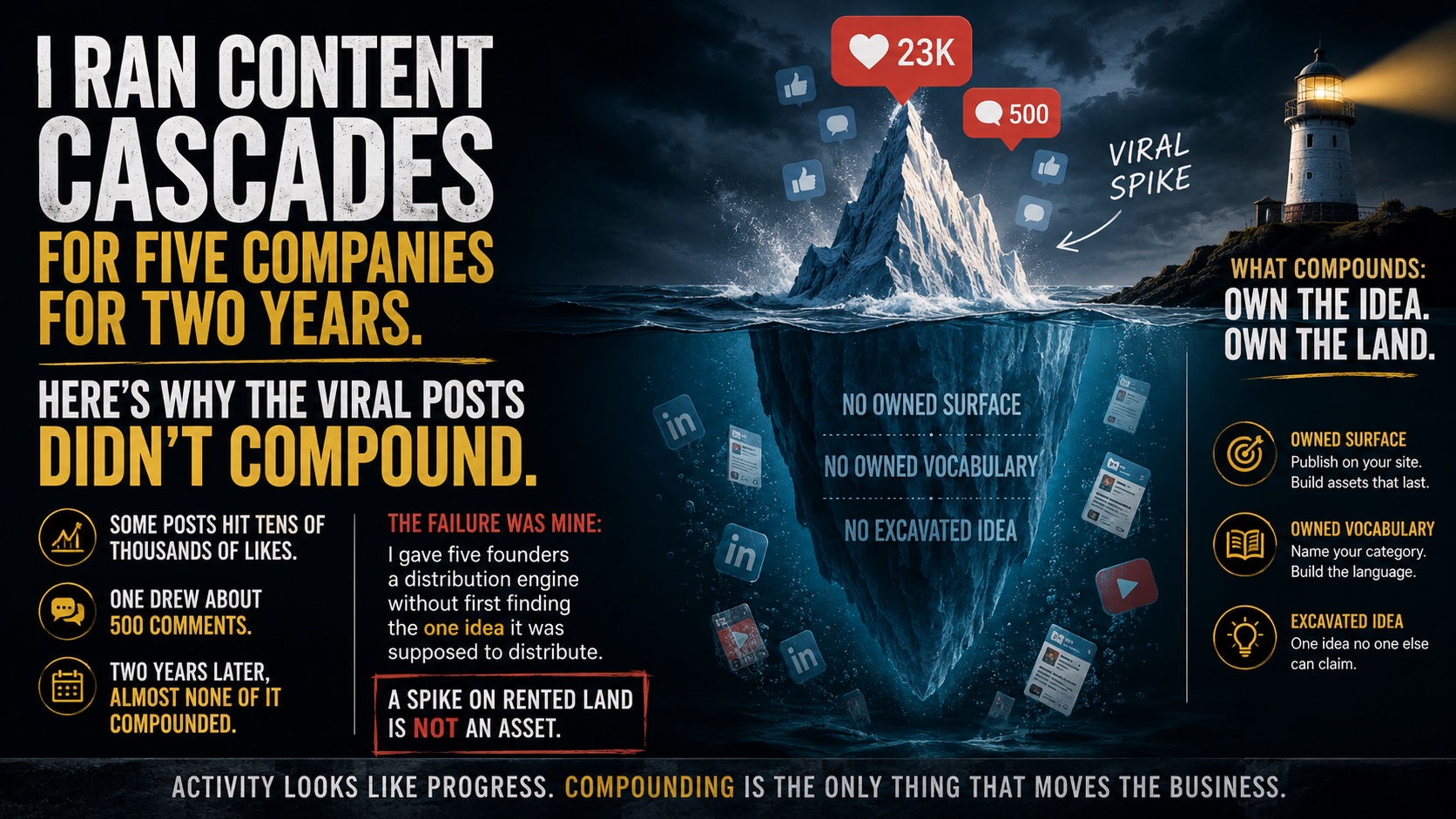 I Ran Content Cascades for Five Companies for Two Years. Here's Why the Viral Posts Didn't Compound. I built a machine that turned one founder interview into weeks of content. It worked. Some posts hit tens of thousands of likes and hundreds of comments. Two years later almost none of it compounded, and the reason was mine: I gave five companies a distribution engine without first finding the one idea it was supposed to distribute. A spike on rented land is not an asset.
 -
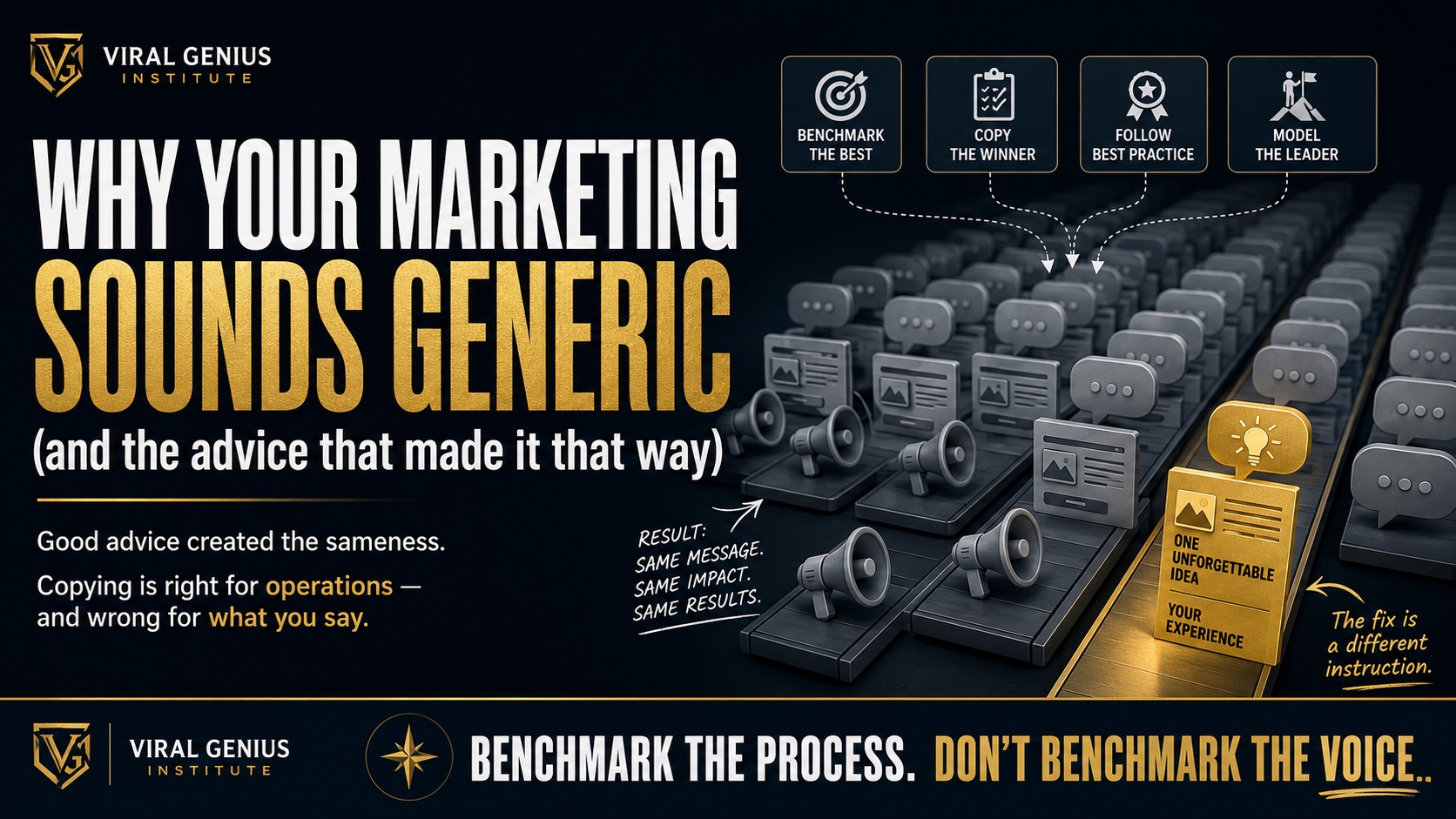 Why Your Marketing Sounds Generic (and the Advice That Made It That Way) Your marketing sounds generic because you followed good advice. Don't reinvent the wheel, look at what the winner is doing and model it. That instruction is correct for how you run payroll and wrong for what you say, and two separate bodies of research have documented it producing whole industries that sound identical. The fix is a different instruction, not more effort.
 -
 Why Is My Business Invisible? (It's Not a Traffic Problem) Half the internet is now machine-written. Two-thirds of Google searches end without a click. And 64% of B2B buyers say they can't tell one vendor's digital experience from another. Your clients love your work and the engines still don't bring you up. Publishing more makes it worse, because volume multiplies whatever you already sound like. The fix: find the one thing only you can say, name it, and lead with it everywhere.
 -
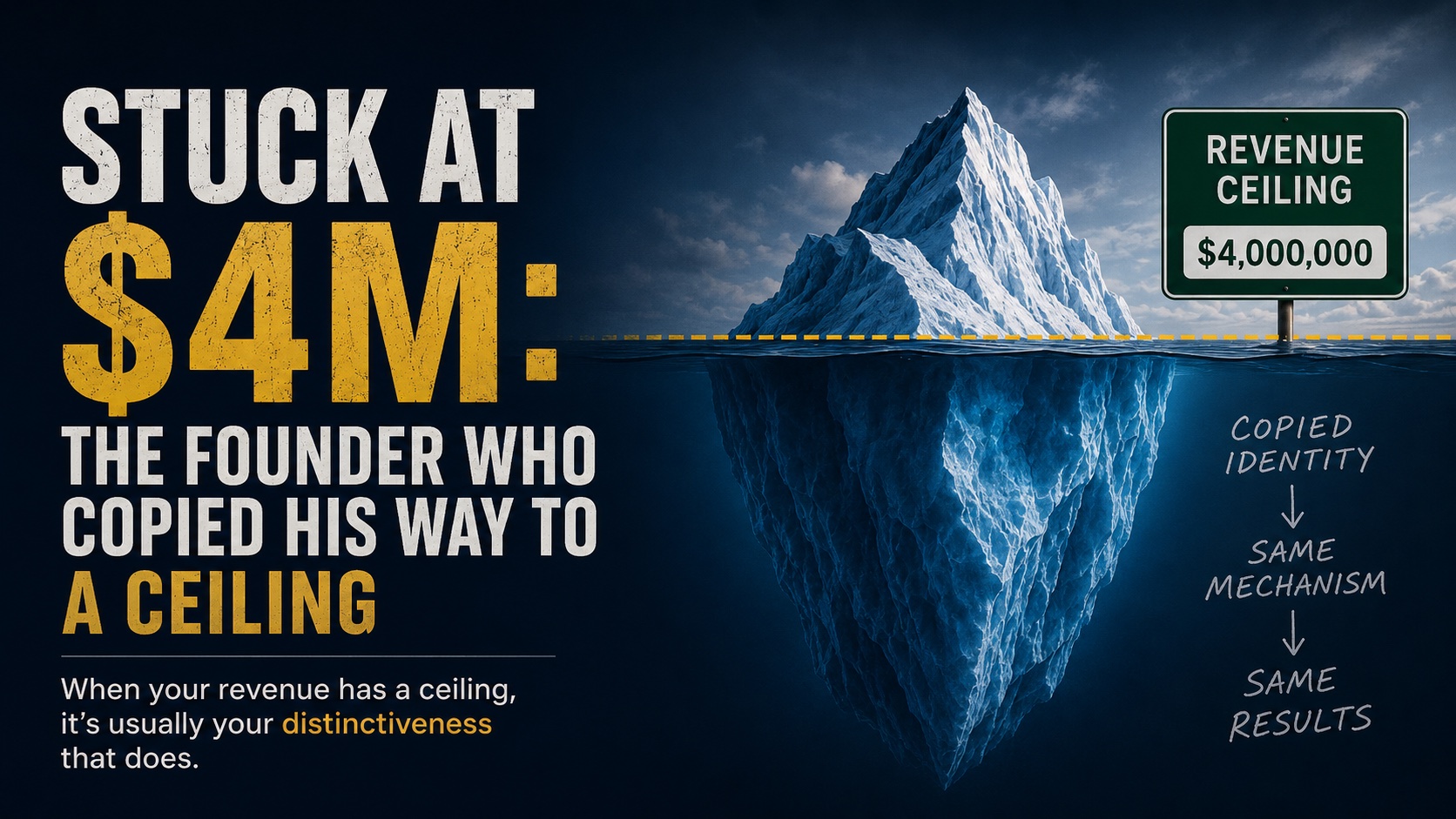 Stuck at $4M: The Founder Who Copied His Way to a Ceiling He had hundreds of thousands of subscribers, a fanatical audience, and $4M a year from one product. He also wore a personality he'd taken from someone else, and buried the one thing nobody could copy. Customers loved him and revenue still wouldn't move. Nine times out of ten that means nobody can tell you apart. The fix is usually something the founder already has and threw away as irrelevant.
 -
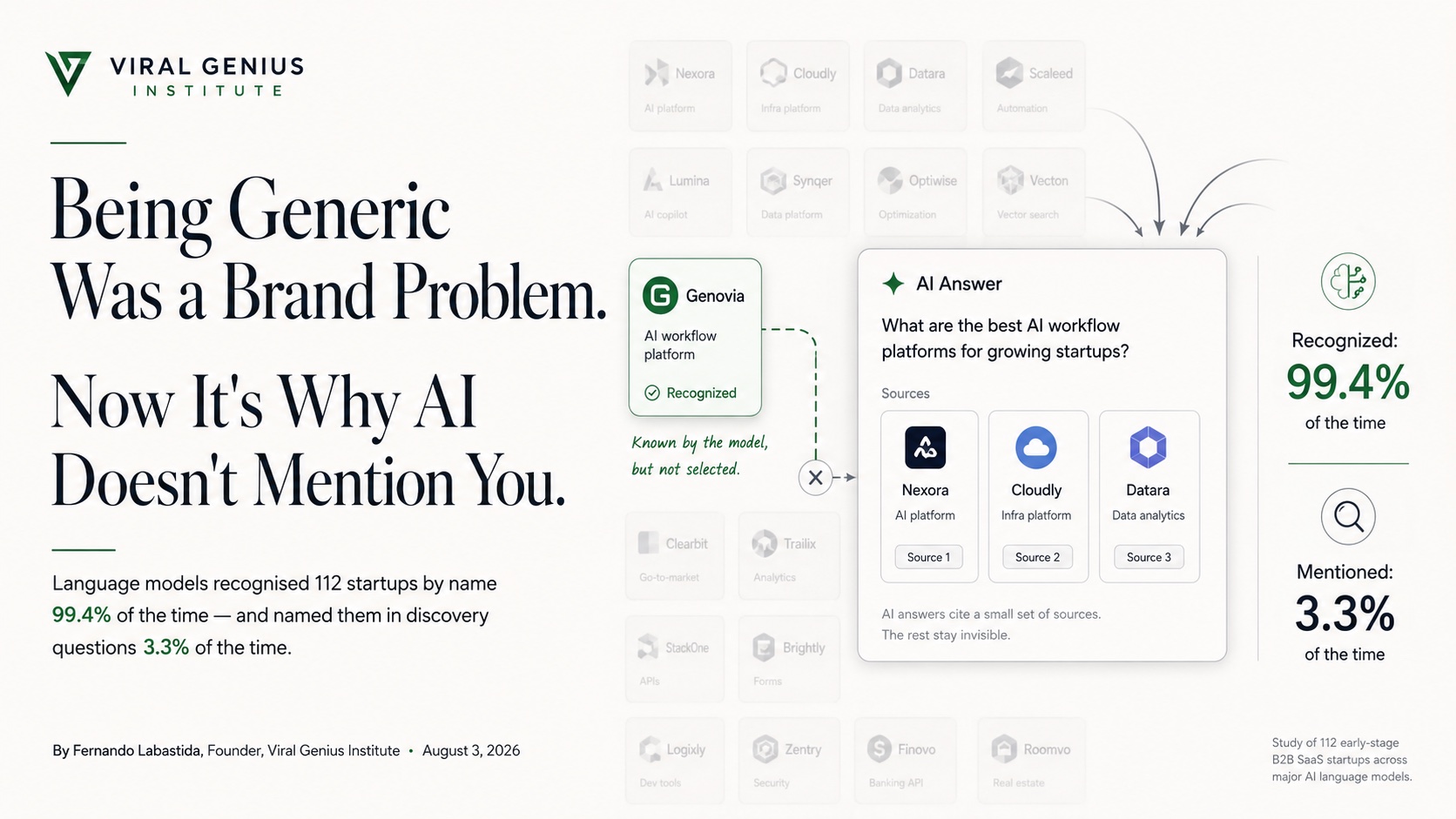 Being Generic Was a Brand Problem. Now It's Why AI Doesn't Mention You. Ask ChatGPT about 112 startups by name and it knows 99.4% of them. Ask it the question a buyer would actually ask and it names 3.3% of them. The machine knows you exist and still won't bring you up. Sounding like everyone else used to cost you margin. Now it costs you the mention. The fix: put something on the page a model can't say without you. A number nobody else has. A position with your name on it.
 -
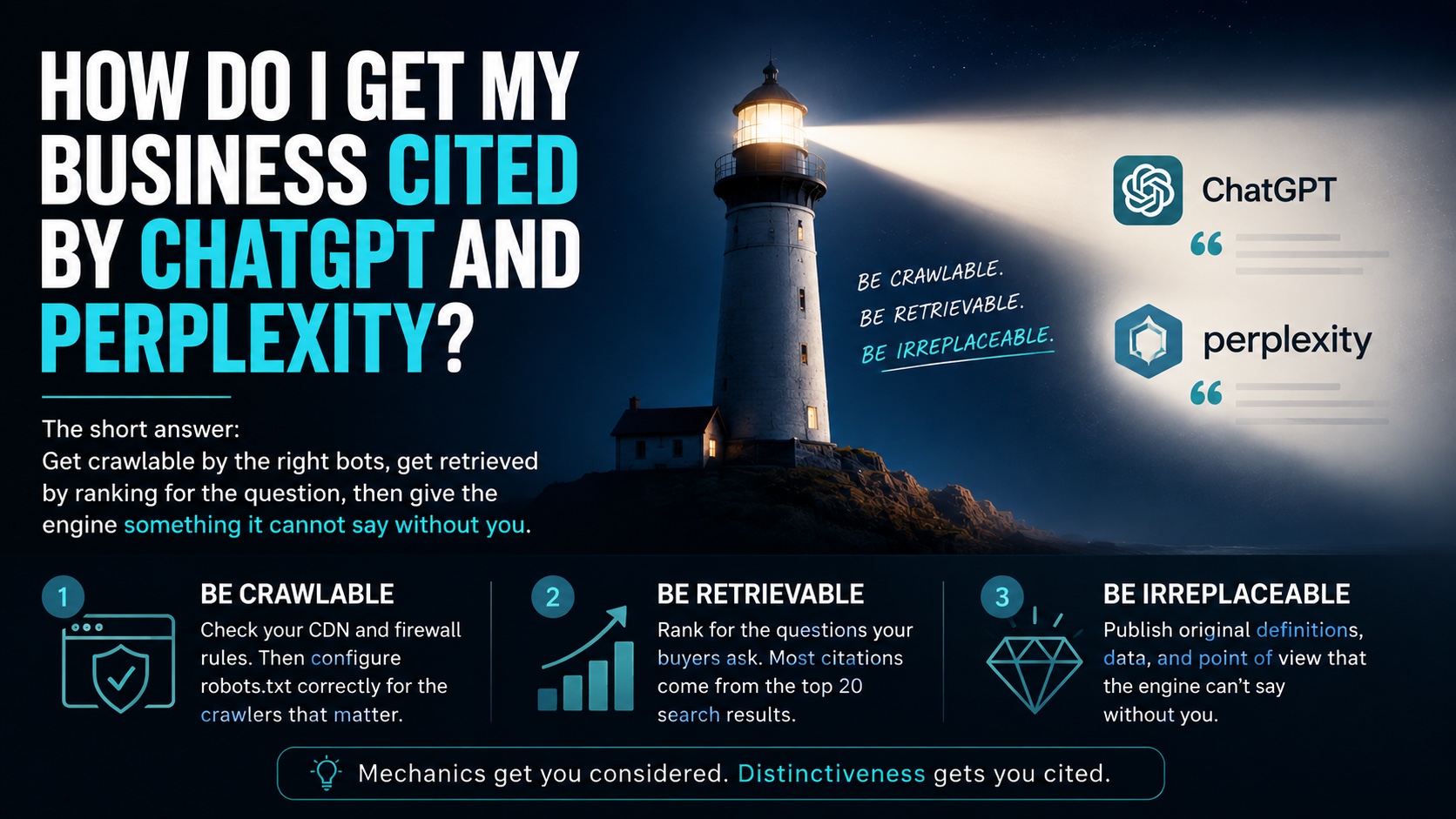 How Do I Get My Business Cited by ChatGPT and Perplexity? Most published advice on this is wrong. Blocking GPTBot doesn't stop ChatGPT citing you. No engine reads llms.txt. And the only controlled study of schema markup found no benefit at all. Three things do work, in this order: let the right bots in, rank for the question people actually type, then put something on the page the engine can't say without you.
 -
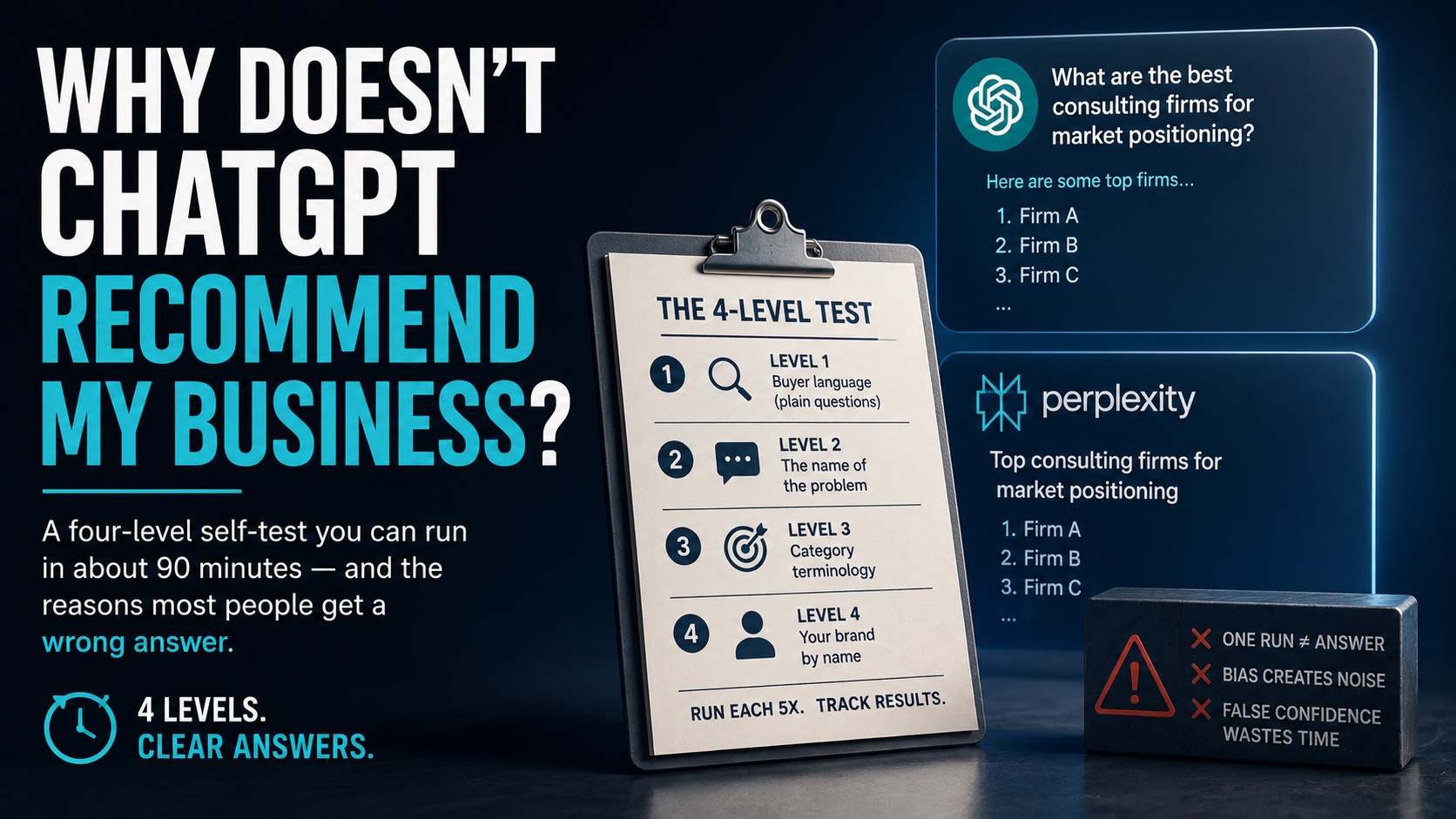 Why Doesn't ChatGPT Recommend My Business? There are four reasons, and from the outside they look identical. The engine can't reach you. It can reach you but you're never in the running. It reads you and finds nothing worth quoting. Or it knows you by name and never brings you up. Each one has a different fix, and picking the wrong one costs you a quarter. A four-level query test tells you which you have in about ninety minutes.
 - The One-Page Website That Beat a Fully Optimized Site Same company, same week. One site had schema, a sitemap and a robots.txt. The other was a single static page with none of it. The one-pager is the one Perplexity quoted word for word. Passing the checklist gets your page read. One sentence somebody can lift and attribute gets you named.